
Our workforce systems are evolving, but hiring practices, access to opportunities, and shared prosperity need a boost. Our ‘Why’ at The Launch Lab The workforce system we rely on today […]
Our workforce systems are evolving, but hiring practices, access to opportunities, and shared prosperity need a boost.
The workforce system we rely on today was built for a different era. It assumes a linear path from education to employment, a predictable labor market, and hiring practices that reward experience over skills. But the world has changed—and our workforce strategies need a tune-up.
Silicon Valley is one of the world’s leading economic engines, generating extraordinary wealth and driving global innovation. However, access to that prosperity is not evenly distributed. While some have thrived, many workers remain in low-wage jobs without clear pathways to career advancement.
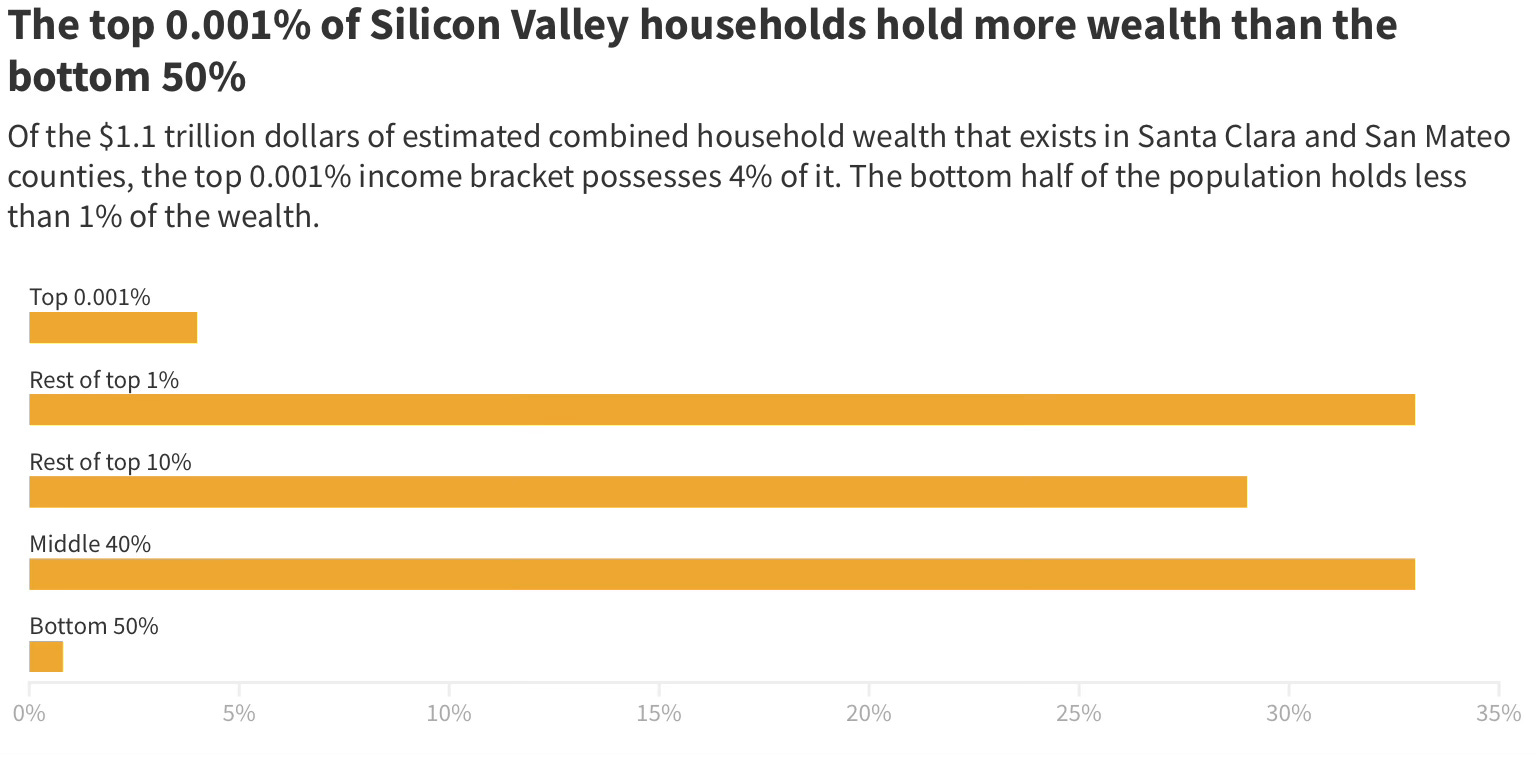
But here’s the opportunity: innovation in workforce development can change this trajectory. To build a more sustainable economy, we must ensure that all residents—regardless of background—have opportunities to participate in and benefit from our region’s economic growth. Expanding workforce access, modernizing hiring practices, and creating strong career pathways are essential steps toward shared prosperity.
Our regional workforce system is evolving to meet employer demand and equip workers with the skills and networks they need to thrive in an economy that rewards adaptability and skill development.
Access to Public Workforce Systems Is Uneven
The broader public workforce system is fragmented, leaving too many people unaware of or unable to access available training and employment resources. Recent research from the U.S. Chamber of Commerce Foundation highlights the need for Skill Savings Accounts—a flexible, employer-supported model that allows workers to invest in lifelong learning and career transitions.
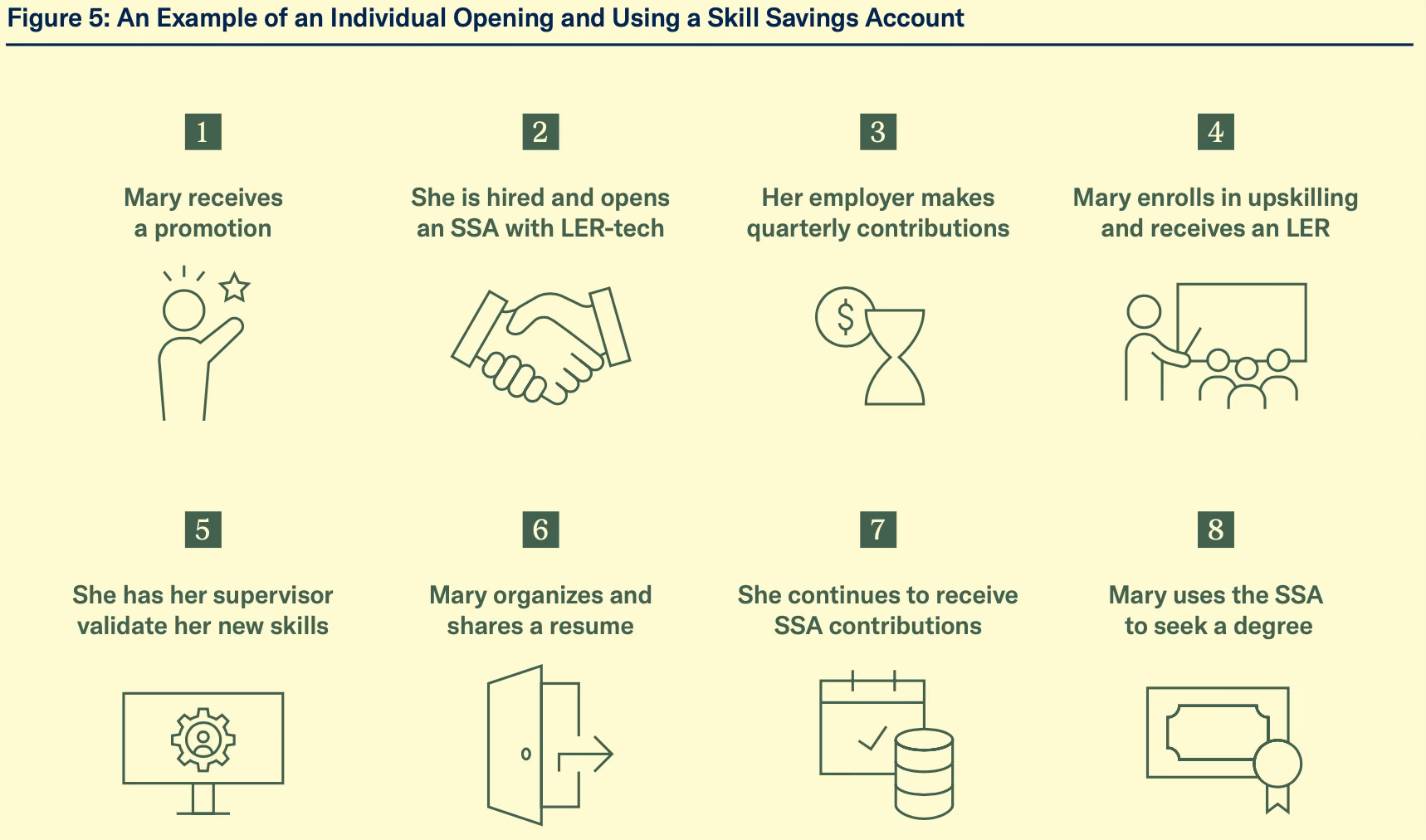
A cradle-to-career approach—one that integrates early education, higher education, and ongoing skills training—is essential to ensuring all workers have equitable career opportunities.
By expanding community-based access points, digital tools, and portable funding mechanisms, we can create a system where every worker, regardless of background, has the opportunity to learn, grow, and adapt in a fast-changing economy.
Hiring 2.0
Many companies still screen candidates based on degrees and years of experience rather than demonstrated skills and potential. This excludes talented individuals, especially from underrepresented communities, who could excel if given the opportunity. Skills-based hiring (SBH) is proving to be a game changer. Companies that embrace SBH are seeing higher retention rates (+20%) and increased pay (+25%) for non-degreed hires compared to traditional hiring models.
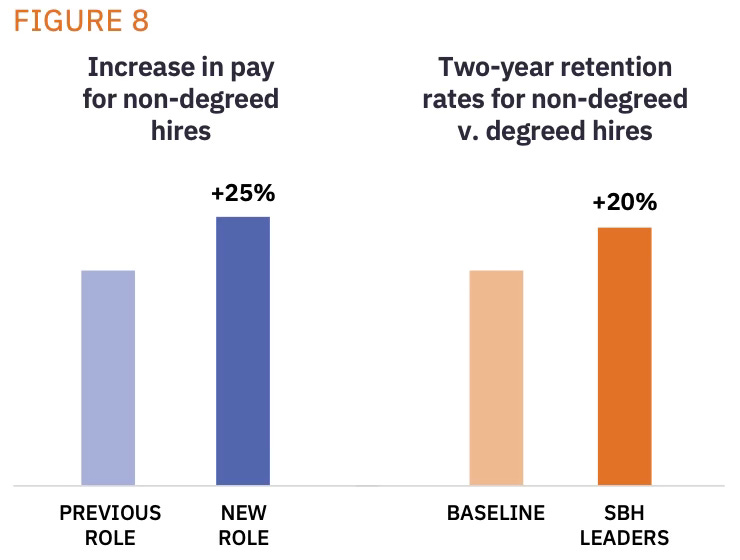
A recent study from The Burning Glass Institute confirms that shifting to skills-first hiring not only improves talent pools but also reduces time-to-hire and improves overall job fit, benefiting both workers and employers. By removing unnecessary degree barriers, we unlock opportunities for millions of capable workers while helping businesses close talent gaps in key industries. The good news is many companies are already reaping the benefits of this shift!
Economic Mobility Is Stalling
Economic mobility in the U.S. has been declining for decades. In 1940, 90% of children outearned their parents—today, that number has dropped below 50%.
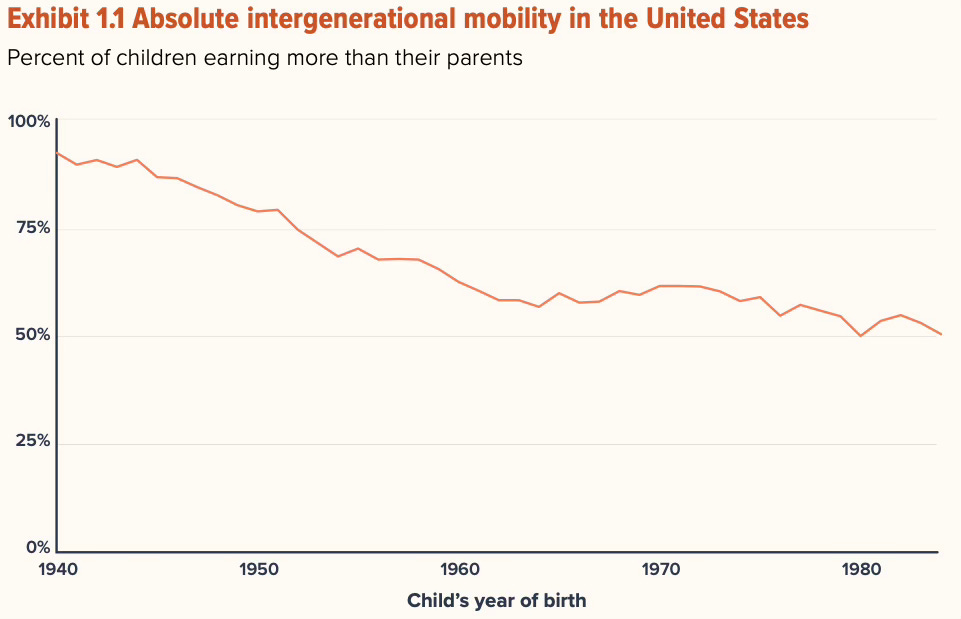
The ability to move up the economic ladder is no longer a given, and too many workers remain stuck in low-wage roles without access to clear career pathways.
Research from a recent Mobility Experiences report identifies key life experiences that drive long-term income growth: obtaining a first full-time job with advancement opportunities, completing postsecondary education, and receiving job or skills training. Workforce programs must shift from short-term job placement to long-term career mobility strategies, integrating mentorship, upskilling, and employer partnerships that lead to real economic growth. By fostering stronger career pathways and continuous learning, we can rebuild economic mobility and ensure workers have opportunities to thrive.
Taking advantage of these opportunities requires bold, systemic change. The data is clear—access to opportunity remains uneven, hiring still favors credentials over skills, and too many workers are locked out of economic advancement. But we also know the solutions: develop new approaches that connect people to meaningful career pathways, remove outdated hiring barriers, and expand access to upskilling and lifelong learning.
At The Launch Lab, we’re designing and testing new models of workforce development that address these three fundamental gaps:
We’re just getting started. This year, we plan to expand our pilot programs, refine our current approaches, and gather real-world insights into what works. While we don’t have all the answers yet, we are committed to testing, learning, and iterating to develop workforce models that drive real impact.
Stay in touch as our Lab launches by following along here on Subtack, on LinkedIn, and on our new website (launching soon)!

2025 © All Rights Reserved. Website Policies Stevens Amendment