
Achieving Success by Meeting People Where They Are
Achieving Success by Meeting People Where They Are
What if workforce development wasn’t just about getting people into jobs but about ensuring they thrive once they’re there? What if the supports needed for success—housing stability, childcare, mental health services, and financial coaching—were fully integrated into workforce strategies rather than treated as separate issues? At NOVAworks Launch Lab, we believe that the next evolution of workforce development demands this kind of shift in thinking.
Our Whole Person Project is an experiment, a proving ground to explore how we can better support workers in an economy that is changing faster than ever before. We know traditional workforce programs have done great work in connecting people to jobs, but now is the time to think bigger. What does it take to ensure people don’t just get hired but actually build sustainable, fulfilling careers? Early results from our pilot indicate that this approach is working—participants are staying in jobs longer, reporting increased stability, and feeling more supported in their career paths.
The Next Evolution of Workforce Development
The Gates Foundation’s Mobility Experiences research underscores that economic mobility is not a straight line—it is shaped by key life experiences and access to critical supports.
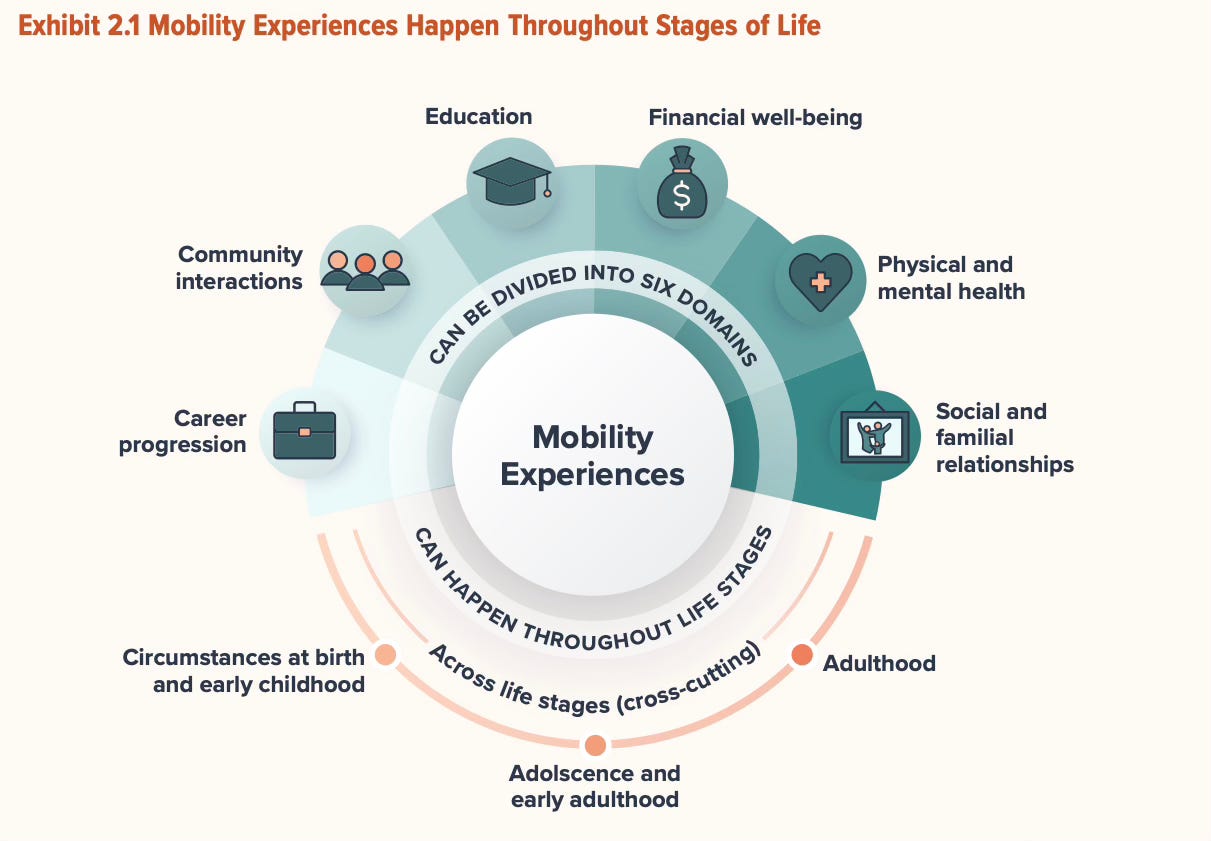
Similarly, the Urban Institute’s Upward Mobility Framework highlights that housing, health, and financial security play fundamental roles in shaping a person’s ability to stay and advance in the workforce. If we take these insights seriously, what should the workforce system of the future look like?

Source: Urban Institute Upward Mobility Initiative
Reimagining Workforce Development Through a Whole Person Lens
If we allow ourselves to imagine the possibilities, what would a fully supportive workforce system look like? Here are some key ideas that our Whole Person Project is helping to test:
What We Are Learning
Our initial work in the Whole Person Project is offering early insights that could inform the broader field:
Where Do We Go From Here?
We see the Whole Person Project not just as a pilot, but as a starting point for a larger conversation. How do we take what we’re learning and push our workforce system to be more responsive to the realities of today’s workers? How do we build a system that truly supports economic mobility, not just employment?
This is where we invite you to join us. Whether you’re an employer, a policymaker, a funder, or someone passionate about building a more equitable workforce system, we want to hear from you. What are your thoughts on these ideas? What’s working in your community? What barriers are preventing these innovations from scaling?
The future of workforce development is still being written, and we believe it’s time to think boldly. Let’s build something that works—not just for today but for the evolving world of work ahead.
(Want to stay engaged? Subscribe to our updates and be part of the conversation at NOVAworks Launch Lab.)

2025 © All Rights Reserved. Website Policies Stevens Amendment